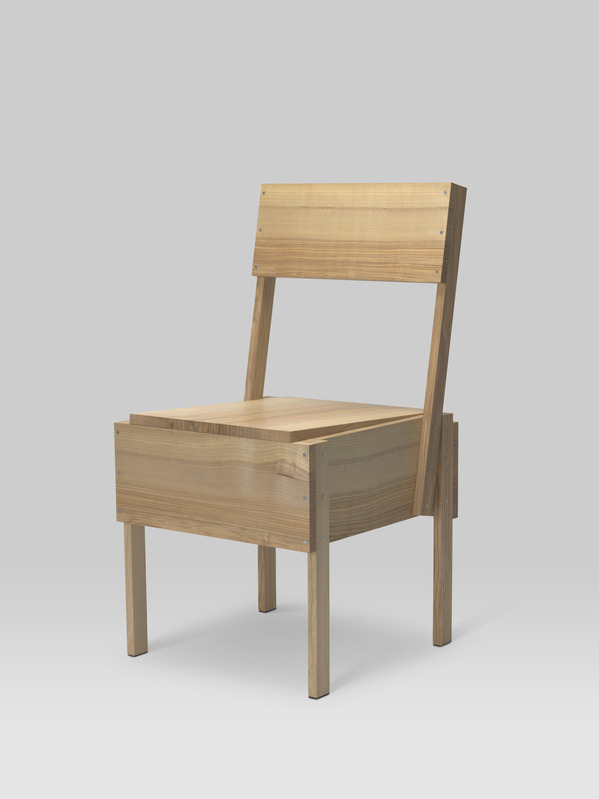
Enzo Mari, Sedia 1. Photograph by Adriaan van Dam.
REFERENCES:
HOW I THINK ABOUT DESIGN
My understanding of design is still taking shape. These are some of my thoughts as I write this.
1. What makes good design?
The answer depends on the scale at which we look. When I evaluate a design, I also think about its purpose and the means it uses to achieve it as two separate questions.
At the scale of a single design decision, I admire it when a designer puts a great deal of thought into the concept and ends up making a small change that brings a significant improvement. That effort isn’t always a matter of time. An idea can come in a flash, and that moment may draw on a long period of observation, research, and experience. What I find harder to accept is a concept arrived at casually, followed by a great deal of effort to make it work.
2. Less is more.
3. It’s easy to dismiss something. It’s harder to understand it.
When I see people discussing new products like the Ferrari Luce or the iPhone Duo, or talking about a possible MacBook Ultra, I notice how quickly some people criticize a product before they’ve used it or even taken the time to understand it.
I think a designer should be willing to ask why something was designed the way it was. What problem was it meant to solve? What works well, and why? Where does it fall short? I may still dislike it once I understand it better, but at least I can explain where my judgment comes from. That’s the attitude I think a designer should bring to the discussion.
4. A designer’s responsibility
Among the United Nations Sustainable Development Goals (SDGs), some are already part of the work I do. Others are goals I hope to contribute to in the future.
- SDG 12 · Responsible Consumption and Production
- SDG 14 · Life Below Water
- SDG 9 · Industry, Innovation and Infrastructure
- SDG 1 · No Poverty
- SDG 2 · Zero Hunger
- SDG 10 · Reduced Inequalities